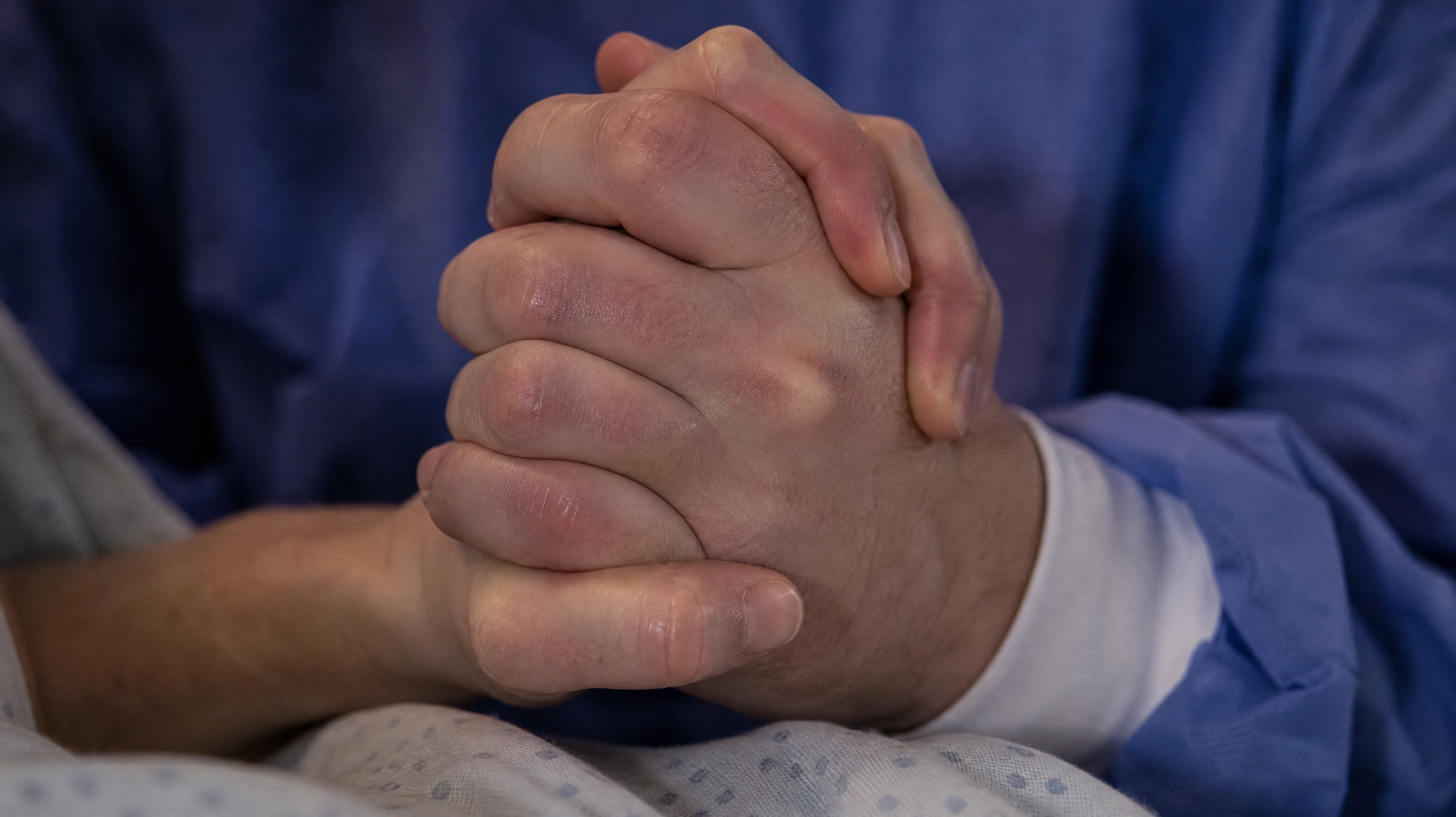

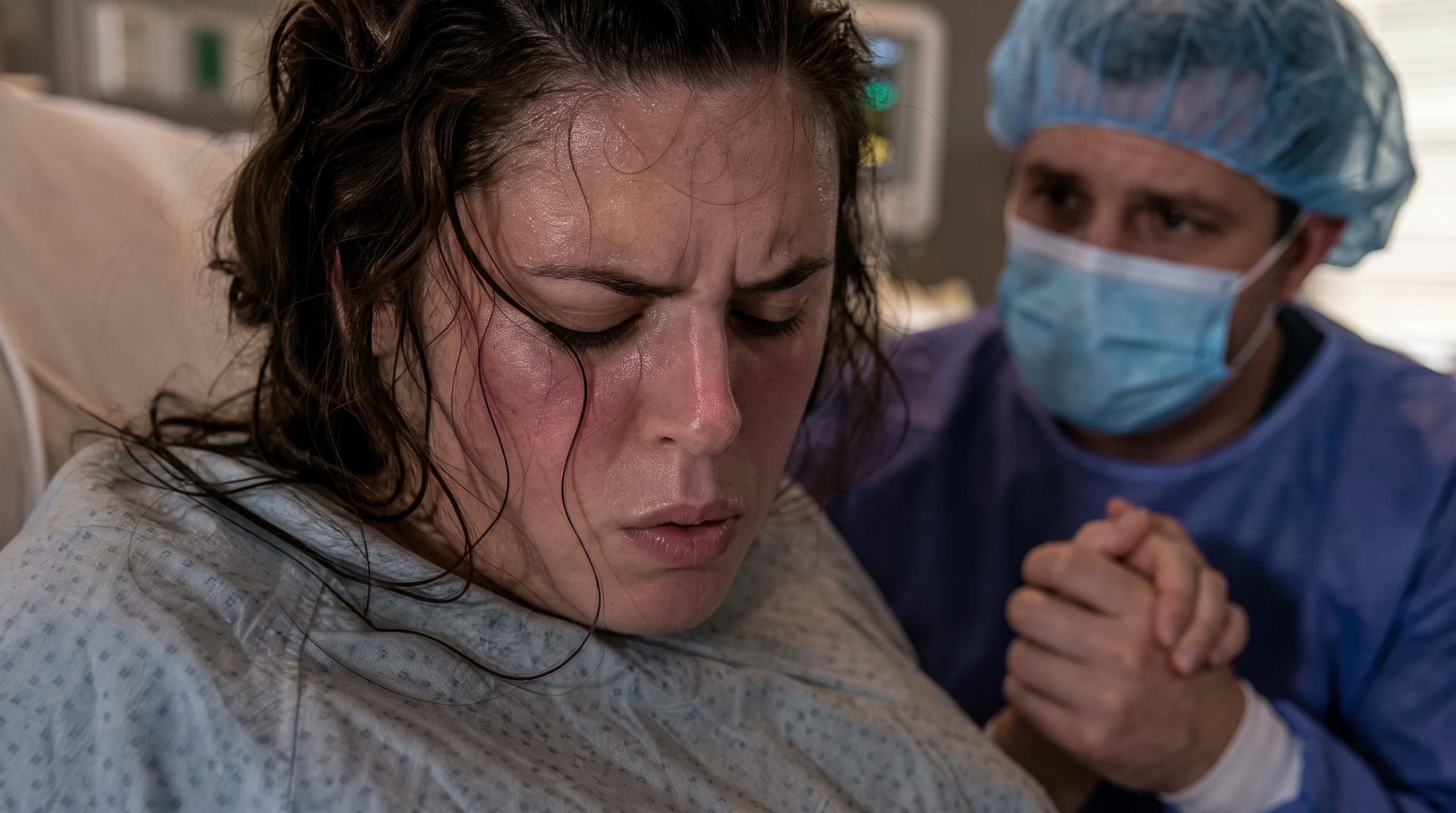
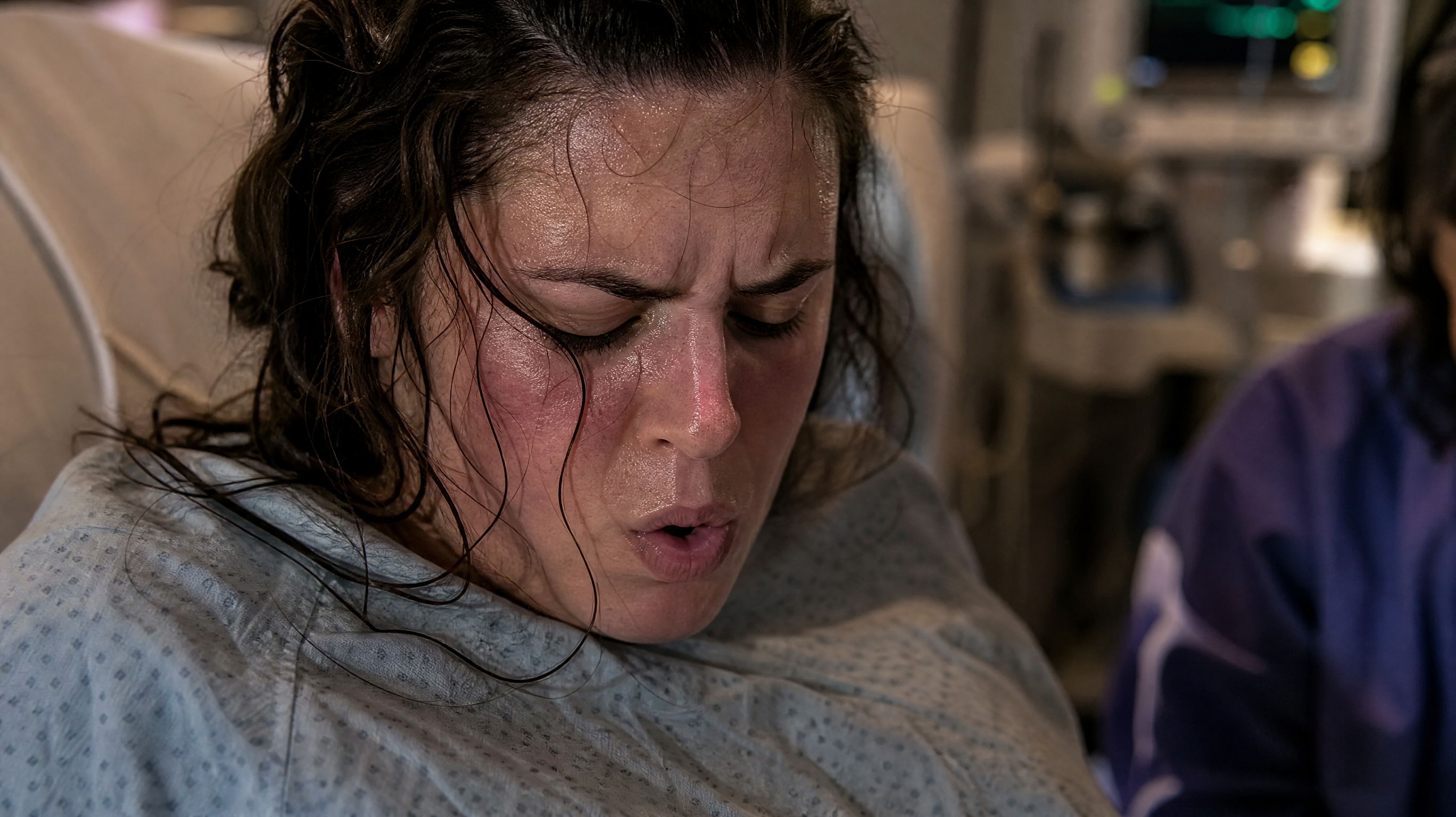
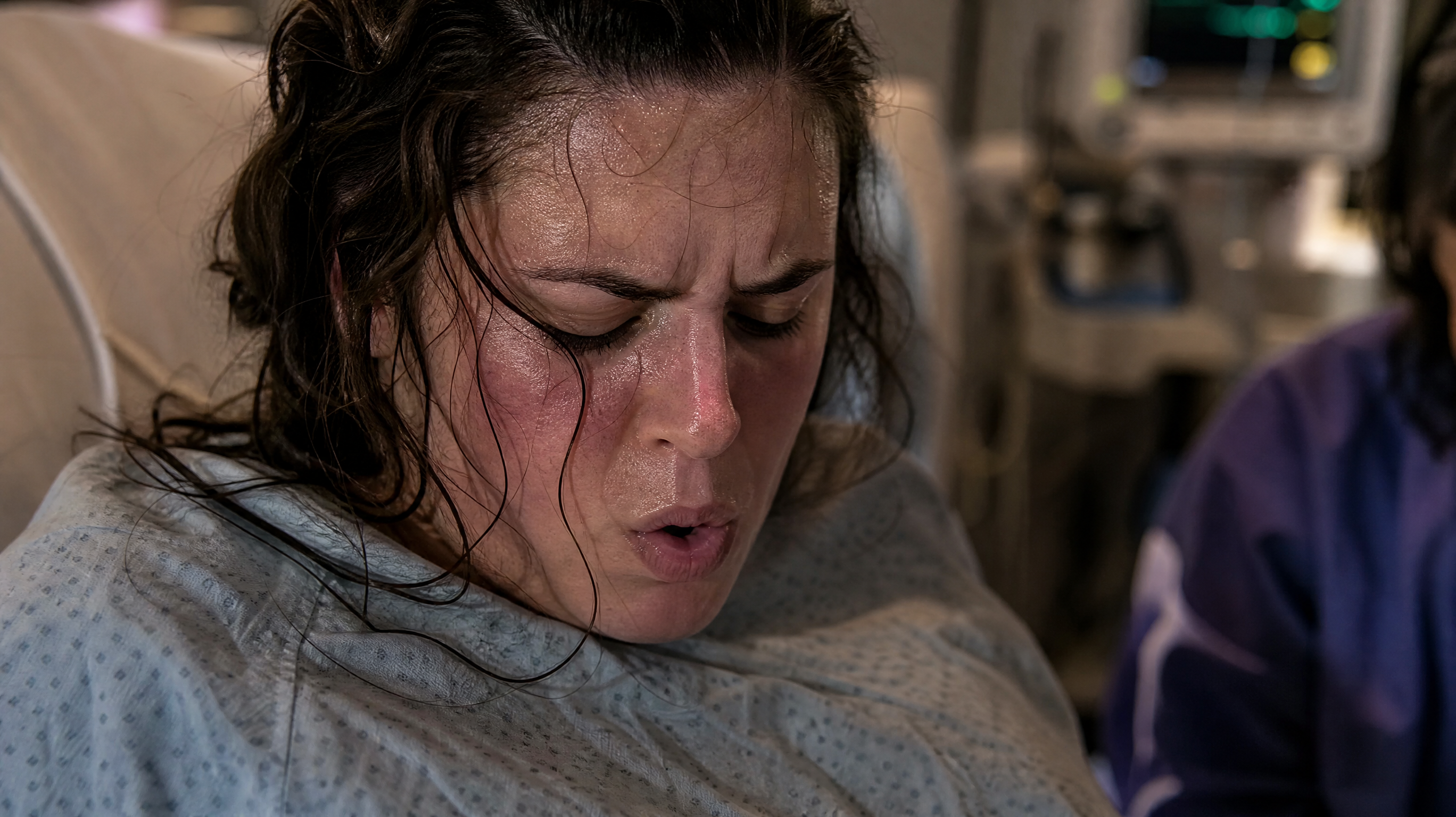


Use Reference 1 as the strict source image and create an additional shot from the exact same continuous scene and exact same moment. Preserve all visual continuity: the same woman, the same man, their exact clothing, skin tone, hands, hospital environment, lighting, color palette, texture, and realistic documentary style. Change only the framing and camera position. EXTREME CLOSE-UP OF THEIR HANDS ONLY. No faces, no heads, no upper bodies visible. Frame tightly around the physical contact between their hands. The woman's hand is gripping the man's hand with extreme force during the contraction. Her fingers are wrapped tightly around his hand, digging firmly into the skin; her knuckles and fingertips are visibly pale and slightly whitened from the pressure. His hand is visibly compressed inside her grip, showing believable skin deformation and tension from the force. Their fingers remain anatomically correct and naturally interlocked. The grip should communicate intense physical strain without showing anything graphic. At the very bottom edge of the frame, include only a small portion of the same white hospital bedsheet. Keep the surrounding hospital environment mostly outside the frame and softly indistinct. Very intimate observational documentary photography, as if a handheld camera operator suddenly noticed their hands and captured this detail. Slight imperfect handheld framing, subtle natural micro-shake feeling, shallow depth of field focused precisely on the gripping fingers and compressed hands. Natural hospital lighting identical to Reference 1, realistic skin texture, pores, veins, pressure marks and subtle perspiration. This must look like a second camera angle from the exact same scene, not a newly designed scene. Preserve continuity with Reference 1. No faces anywhere in the frame, no extra hands, no extra fingers, no malformed anatomy, no jewelry or clothing changes, no change in lighting or color grading.
Free to start · Generate videos and images with AI in seconds