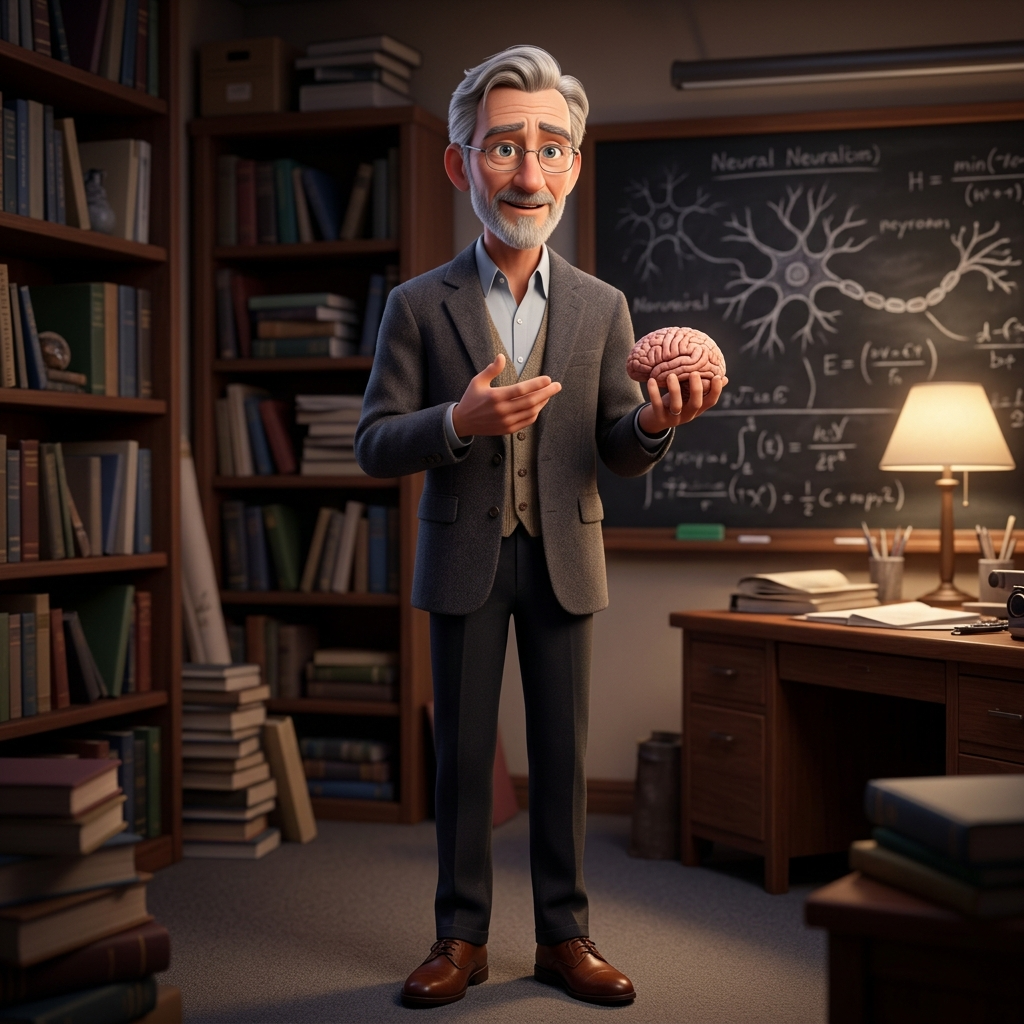





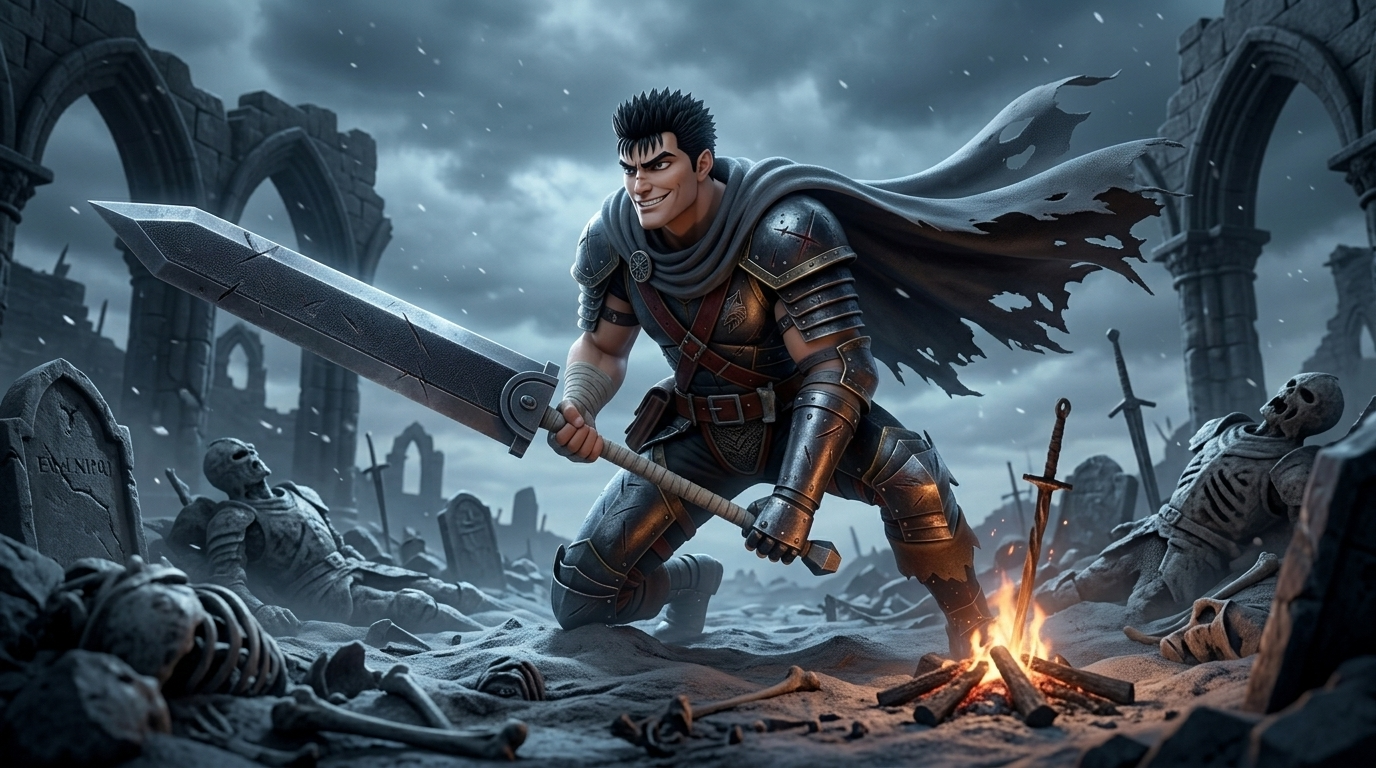
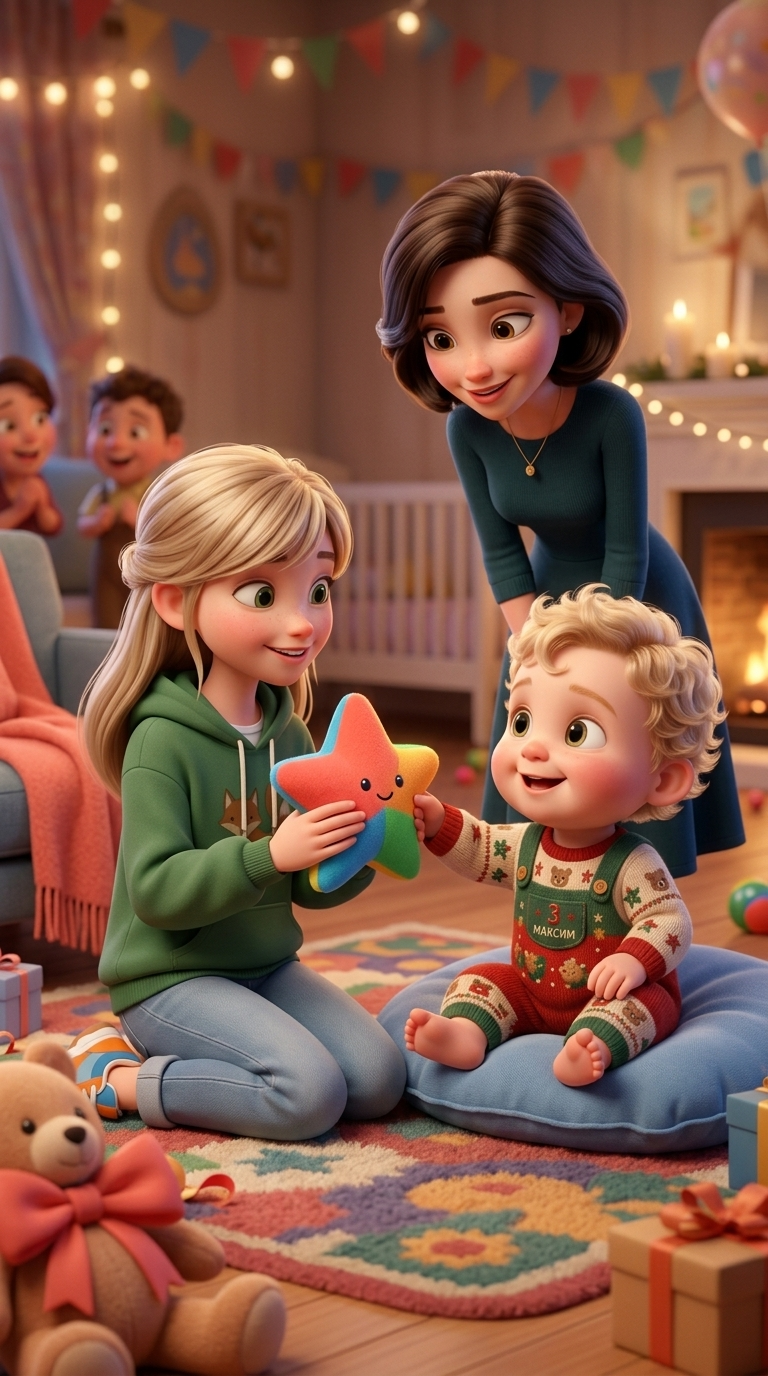
Art style: 3D Pixar. Full-length view, the entire figure visible from head to feet, standing upright, figure centered — Professor V. Selezin, a fictional neurophysiologist in his early sixties. A tall, lean man with slightly stooped scholarly posture, warm pale skin, and a thoughtful, kind face marked by fine wrinkles and expressive arched brows. Silver-grey hair swept back, a neatly trimmed matching short beard, and thin rimless glasses over attentive light-blue eyes. He wears a soft charcoal wool blazer over a pale-blue open-collar shirt and a knitted vest, dark tailored trousers, and polished brown leather brogues. He holds a small brain anatomical model in one hand, gesturing gently with the other, a curious warm smile on his lips. Behind him a cozy dim university office of tall bookshelves, chalkboard with neural diagrams, and softly glowing desk lamp. ━━━━━━━━━━━━━━━━━━━━━━━━━━━━━━━━━━━━━━ FINAL STYLE ENFORCEMENT (this is the authoritative rendering directive — it overrides any style wording elsewhere in the prompt): Render this image in the following art style: Pixar-style 3D computer animation (Pixar / Disney feature-film look) — fully volumetric 3D rendering with rounded dimensional forms, soft subsurface-scattering skin, physically based materials, soft global illumination, warm cinematic key light, gentle depth of field, vibrant family-friendly colours. CRITICAL: EVERY element — characters, foliage, trees, animals, water, sky, props and the entire environment — must be rendered as polished 3D CGI with real depth and form. This is NOT flat 2D illustration, NOT a watercolour or storybook painting, NOT cel-shaded anime. Every surface, skin, fabric, material, and environmental element must be rendered in this idiom.
Free to start · Generate videos and images with AI in seconds