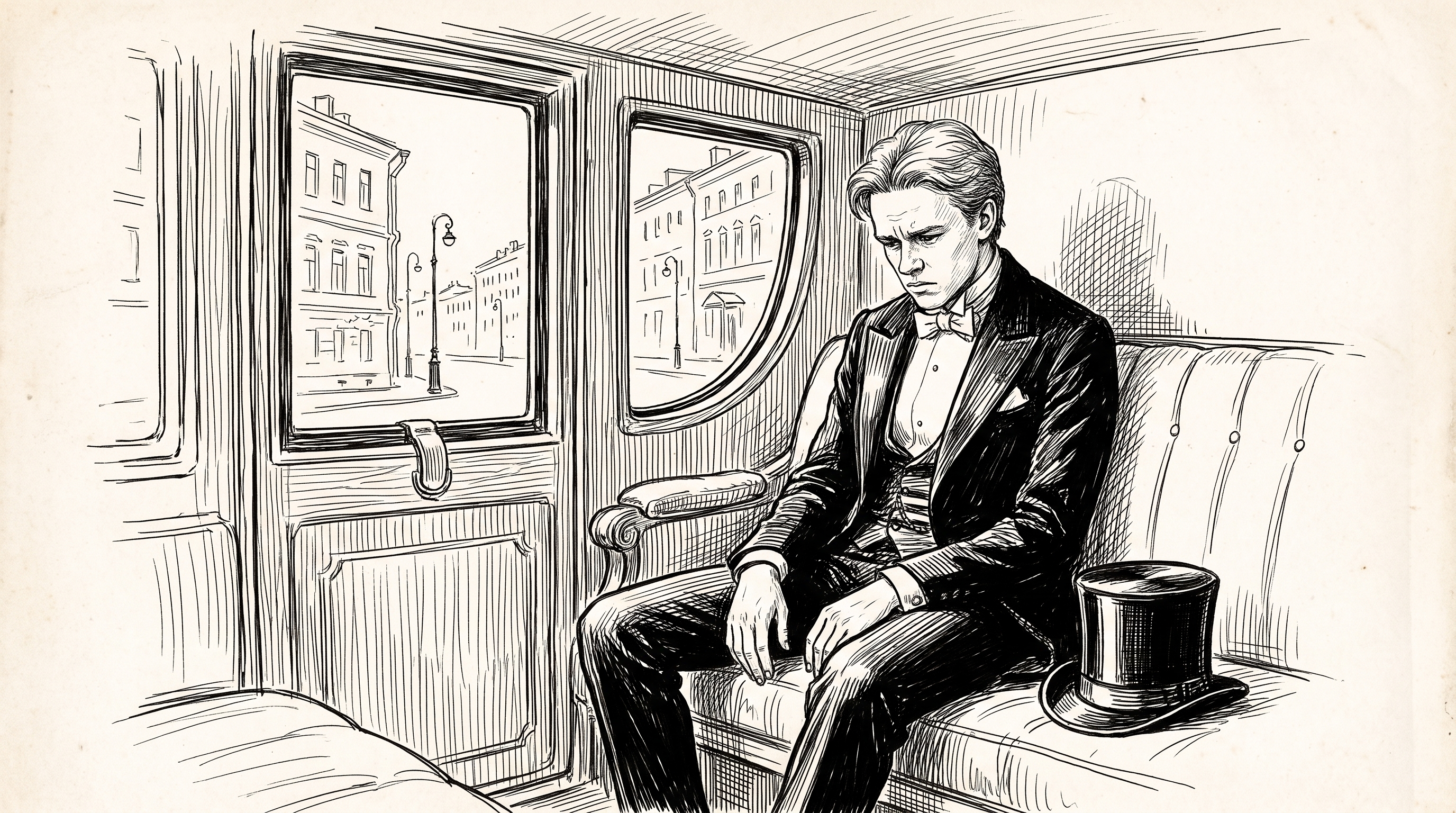
Image - 2026-08-25 03:55
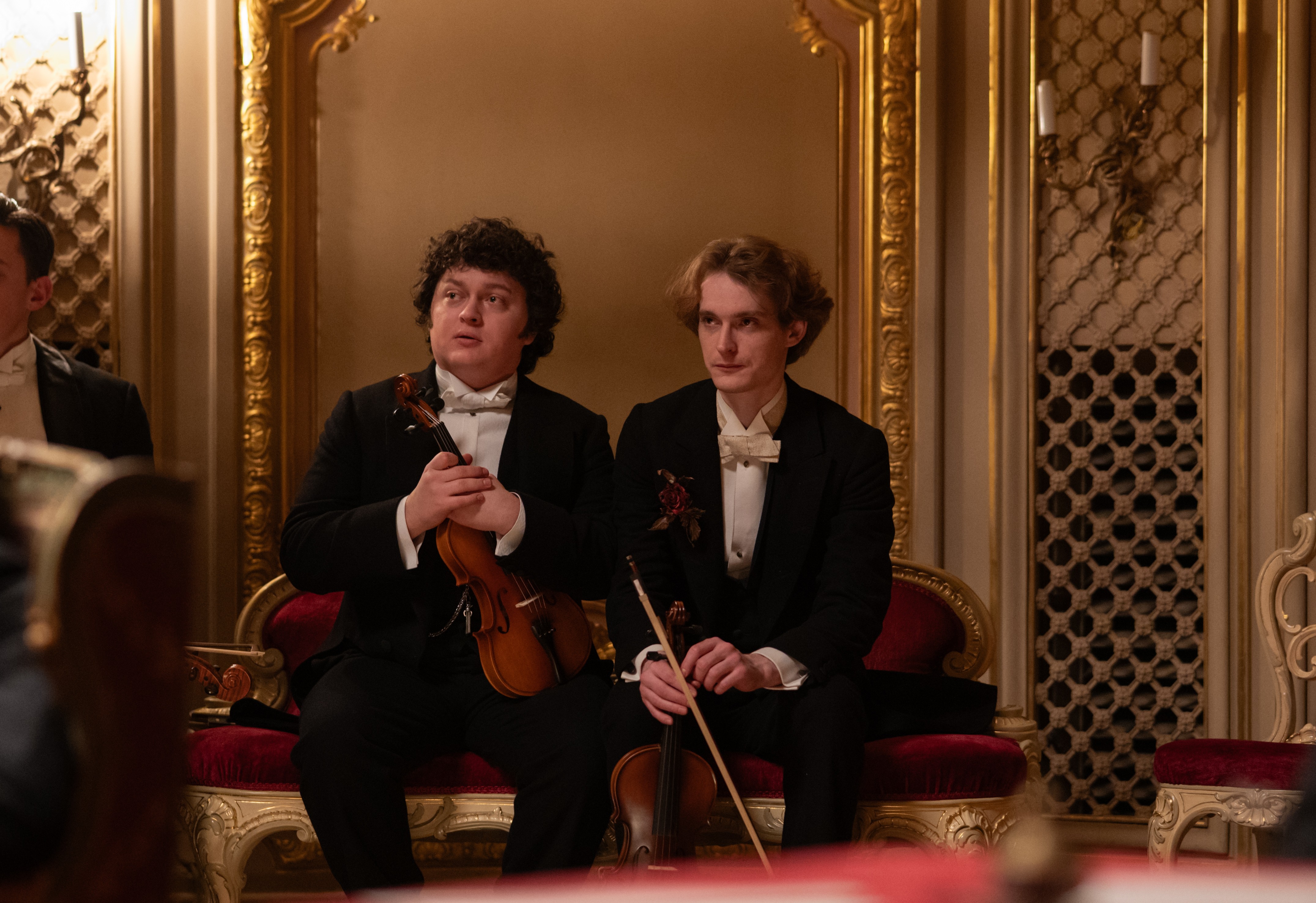
Transform this image into a pen-and-ink drawing in the style of Pushkin's manuscript illustrations, while strictly preserving the exact facial features, expression, and costume from the attached reference photo of Andreev. CRITICAL — CHARACTER ACCURACY (MAXIMUM PRIORITY): Andreev: Must remain EXACTLY as in the reference photo — his specific face, eyes, nose, mouth, cheekbones, blond hair, and expression. His face must be immediately recognizable as the same person. Do not alter, idealize, or generalize his features — only change the rendering technique to ink lines. Costume: Must be EXACTLY as in the reference — he wears a formal black tailcoat, white shirt, white cravat (tie), and formal trousers. This is his concert/audition attire. Expression: His face shows disappointment, frustration, and defeat — he is clearly upset after a failed audition. DO NOT change, idealize, or generalize his face. Keep every unique, specific feature from the reference photo. Preserve his hairstyle and hair color exactly as in the reference photo (blond). Scene: Inside an elegant 19th-century horse-drawn carriage (kareta) in Saint Petersburg, late 19th century, summer. Andreev sits alone inside the carriage, slumped in his seat, clearly devastated after his audition with Pasquerone. The carriage is elegant but modest — wooden interior, cushioned seats, a small window showing the city passing by outside. He is in full formal attire — black tailcoat, white shirt, white cravat (tie), formal trousers — exactly as in the reference photo. His face is troubled: his brow is furrowed, his jaw tight, his gaze downcast or staring blankly out the window. His body language shows defeat — shoulders slumped, head slightly bowed, hands resting limply on his knees or gripping his hat. His top hat rests beside him on the seat — a symbol of his dashed hopes. Outside the carriage window: The streets of Saint Petersburg pass by — glimpses of elegant buildings, streetlamps, and pedestrians. The summer light filters through the window, casting soft shadows on his face. The mood is heavy with disappointment — the weight of failure, the loss of a dream, the uncertainty of what comes next. Atmosphere: The mood is somber, melancholic, and introspective — a young man confronting failure The carriage interior is dim and intimate, contrasting with the bright city outside A sense of isolation — he is alone in his disappointment The movement of the carriage adds a sense of journey, of being carried forward against his will Style: Pure black ink on clean white paper — no colors, no sepia, no grey tones. Pushkin's characteristic style: light, flowing pen strokes, delicate linework, generous white space, slightly sketchy and unfinished quality. The character's face must be drawn with the highest precision — every line should serve to preserve his identity. Hand-drawn quality with visible searching lines and slight imperfections. Atmospheric and cinematic — the scene captures a moment of deep emotional turmoil. Technical: Monochrome, black ink on white paper, Pushkin illustration style, character strictly based on reference photo, maximum facial accuracy, exact formal costume (black tailcoat, white shirt, white cravat), blond hair, sitting inside a carriage, --ar 2.39:1
Free to start · Generate videos and images with AI in seconds
More from this creator


More Kie.ai images
См. все →